
Refrigerator food spoils faster even though temperature settings haven’t changed — possible cooling system inefficiency
When food starts losing freshness sooner than usual, while the settings on the refrigerator remain untouched, the issue often sits deeper than the control panel. A stable number on the display does not always reflect stable cooling inside the compartment. In many cases, the system works with reduced efficiency, and the user notices the consequences only through food quality.
One of the most common causes is uneven temperature distribution. The refrigerator may still produce cold air, but it stops circulating it properly. This happens when airflow channels are partially blocked or when the internal fan slows down. As a result, some zones become warmer than others. Milk near the door spoils faster, while items closer to the back stay colder. This imbalance creates the impression that the entire unit is failing, even though only circulation is affected.
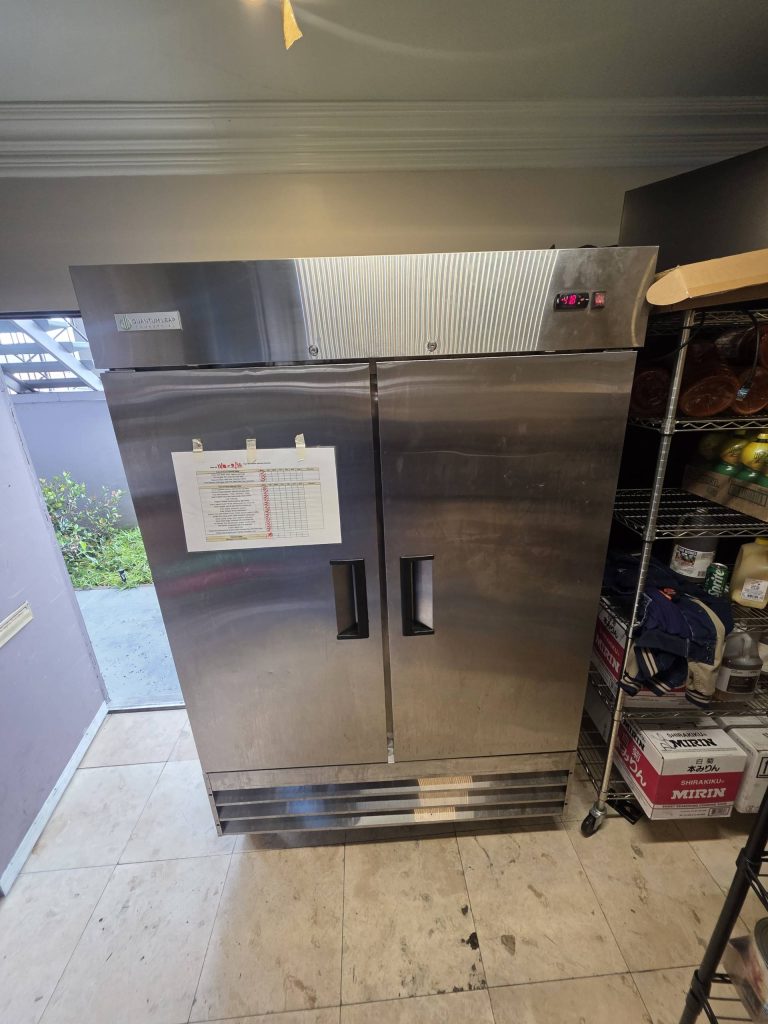
Another frequent issue is dust accumulation on the condenser coils. These coils are responsible for releasing heat from the system. When they are covered with dust or grease, heat exchange becomes less efficient. The compressor is forced to work longer cycles, but cooling output drops. The refrigerator then maintains the set temperature inconsistently, and internal fluctuations accelerate food spoilage. This problem develops gradually, so users rarely connect it to maintenance.
Door sealing also plays a significant role. A worn or slightly deformed gasket allows warm air to enter the chamber. Even small leaks increase humidity and raise the internal temperature by a few degrees over time. The thermostat reacts by triggering more frequent cooling cycles, but the system cannot fully compensate for continuous air exchange. This leads to unstable conditions that are not immediately visible on settings but are noticeable in food storage.
Thermostat or sensor drift is another factor. Temperature sensors inside modern refrigerators can lose accuracy over time. When this happens, the system receives incorrect readings and cools either too weakly or inconsistently. The display may still show the correct value because it reflects a target setting, not the actual internal conditions. This mismatch creates a false sense of normal operation while performance gradually declines.
In some cases, the problem is linked to the evaporator system. Ice buildup on the evaporator coils restricts airflow and reduces cooling capacity. This often results from a faulty defrost system. When defrost cycles stop working correctly, frost accumulates and acts as an insulating layer. Air cannot pass freely, and cooling becomes uneven. Food spoils faster, especially in zones far from the cold air outlet.
Overloading the refrigerator can also contribute. When shelves are packed tightly, air cannot circulate properly. Items placed directly against vents block airflow and create warm pockets inside the compartment. Even a fully functional system struggles under such conditions, leading to inconsistent preservation of food quality.
Power fluctuations are another underestimated factor. Small voltage drops do not always shut the appliance down, but they affect compressor efficiency. Over time, irregular power supply can reduce cooling stability. The refrigerator continues to operate, but its performance becomes less predictable.
The key point is that unchanged settings do not guarantee unchanged performance. Refrigeration systems depend on multiple components working in sync. When even one element loses efficiency, the entire balance shifts. The result is gradual food spoilage, condensation issues, and temperature inconsistency that is hard to trace without inspection.
Regular maintenance reduces the risk of these problems. Cleaning coils, checking door seals, and ensuring proper airflow inside the chamber helps maintain stable operation. However, when symptoms persist, technical diagnostics become necessary. Cooling inefficiency often develops from internal components that cannot be inspected visually without proper tools.
Professional evaluation allows identification of hidden faults such as weak compressor output, sensor errors, or airflow disruptions. Addressing these issues early prevents further deterioration and restores stable temperature control.
When a refrigerator begins to lose cooling consistency, delaying inspection usually leads to higher energy consumption and faster wear of internal components. At that stage, simple adjustments are no longer enough.
For accurate diagnosis and repair, it is reasonable to contact a qualified Service Center. Specialists can assess the system, identify the exact cause of cooling inefficiency, and restore proper operation before food safety becomes a recurring issue.