
Washing Machine Door Seal Keeps Collecting Water After Every Wash — What’s Behind Poor Drainage
Water pooling inside the rubber door seal after a wash cycle is a common complaint that often gets ignored until mold, odor, or leakage appears. In most cases, the machine itself is not “broken” in an obvious way. The issue develops gradually and usually points to drainage, airflow, or loading habits that disrupt how water exits the drum area.
The door seal (gasket) is designed to guide water back into the drum during spinning. When everything works correctly, only minimal moisture remains. If water consistently stays trapped, it means the return path is partially blocked or the machine is not completing drainage efficiently.
One of the most frequent causes is a partially clogged drain system. Lint, small fabric fibers, hair, and detergent residue accumulate in the filter and drain hose over time. Even a mild restriction can slow down water outflow enough for residual water to remain around the seal. In early stages, the machine still completes cycles, so the problem goes unnoticed until visible pooling becomes regular.
A second factor is improper leveling of the appliance. If the machine is slightly tilted forward, water naturally settles toward the door instead of flowing toward the drain pump. This creates a small but constant pocket of moisture in the lower part of the gasket. Many installations skip precise leveling, especially on uneven flooring, which makes this issue more common than expected.
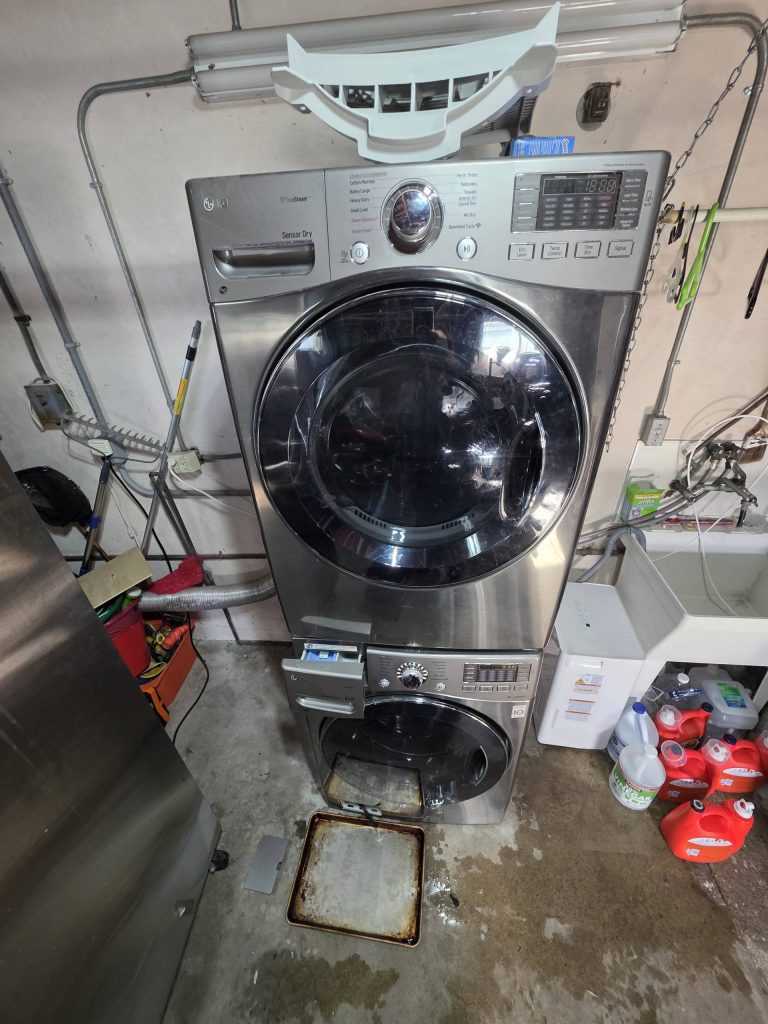
Detergent overuse also contributes to poor drainage behavior. Excess foam reduces the efficiency of rinsing and can leave a thin film inside the drum and seal channels. This film traps water droplets, making it look like drainage is failing even when the pump is functioning normally. Liquid detergent buildup is especially common in cold-water cycles.
Another technical reason involves the drain pump itself. If the impeller is worn or partially obstructed by debris such as coins, buttons, or fabric threads, water evacuation becomes inconsistent. The machine may still drain, but not completely. In such cases, residual water often collects at the lowest point of the door seal after the cycle ends.
Air circulation inside the drum also plays a role. Modern machines rely on residual airflow to help dry internal components after spinning. If the door is closed immediately after a wash, humidity stays trapped inside, and condensation forms along the rubber seal. Over time, this moisture mixes with detergent residue and appears as standing water.
Worn or deformed door gaskets are another overlooked cause. Rubber seals lose elasticity with time, especially when exposed to high temperatures and aggressive cleaning agents. When the lower fold of the seal no longer sits evenly, it forms a small pocket where water accumulates instead of draining back.
Sensor-related issues can also contribute indirectly. If the machine misreads water level or fails to trigger the final spin at full speed, drainage efficiency drops. Incomplete spinning leaves more water in the drum, which then settles into the seal after the cycle ends.
In some cases, the issue is not mechanical but behavioral. Leaving wet laundry inside the machine for long periods allows water to redistribute and collect in folds of the gasket. Similarly, frequent short cycles without full rinsing can lead to residue buildup that traps moisture.
Ignoring persistent water in the door seal can lead to secondary problems. Mold growth develops quickly in damp rubber environments, producing odor and staining. Over time, the seal can degrade faster, requiring replacement instead of cleaning or minor repair.
The key to resolving the issue lies in identifying whether the cause is blockage, installation, usage pattern, or component wear. Simple inspection of the filter, checking machine balance, and reviewing detergent usage can eliminate a large portion of cases. When the problem persists despite basic cleaning, it usually indicates pump inefficiency or seal deterioration that requires technical servicing.
Regular maintenance significantly reduces recurrence. Cleaning the drain filter every few weeks, wiping the gasket after each cycle, and leaving the door slightly open improves moisture evaporation and prevents accumulation.
When drainage issues become consistent, professional diagnosis helps avoid unnecessary part replacement and ensures the root cause is addressed correctly.
If water continues collecting in the door seal after every wash, it is a sign the system is not working at full efficiency. A qualified inspection can restore proper drainage and prevent long-term damage.
If your washing machine shows signs of poor drainage or persistent water buildup in the door seal, contact the Service Center for a professional diagnosis and repair. Timely service helps prevent mold, odor, and further mechanical issues.