
Refrigerator freezer accumulates ice on the back wall only — what it signals about defrost and airflow failures
Ice forming on the back panel inside a freezer is a pattern that points to a specific type of malfunction. When the layer keeps returning after cleaning, the issue is usually tied to how the appliance manages frost removal and how air moves through the chamber. Over time this leads to uneven cooling, longer freezing cycles, and increased energy use.
What this symptom usually means
In a properly working freezer, frost appears in controlled cycles and is removed automatically during defrost phases. When ice builds up only on the back wall, it suggests that moisture is freezing faster than it can be cleared or that cold air is not circulating as designed. This creates a localized cold zone where ice repeatedly forms.
Two systems are typically involved: the defrost system and the internal airflow system. Problems in either can produce the same visible result.
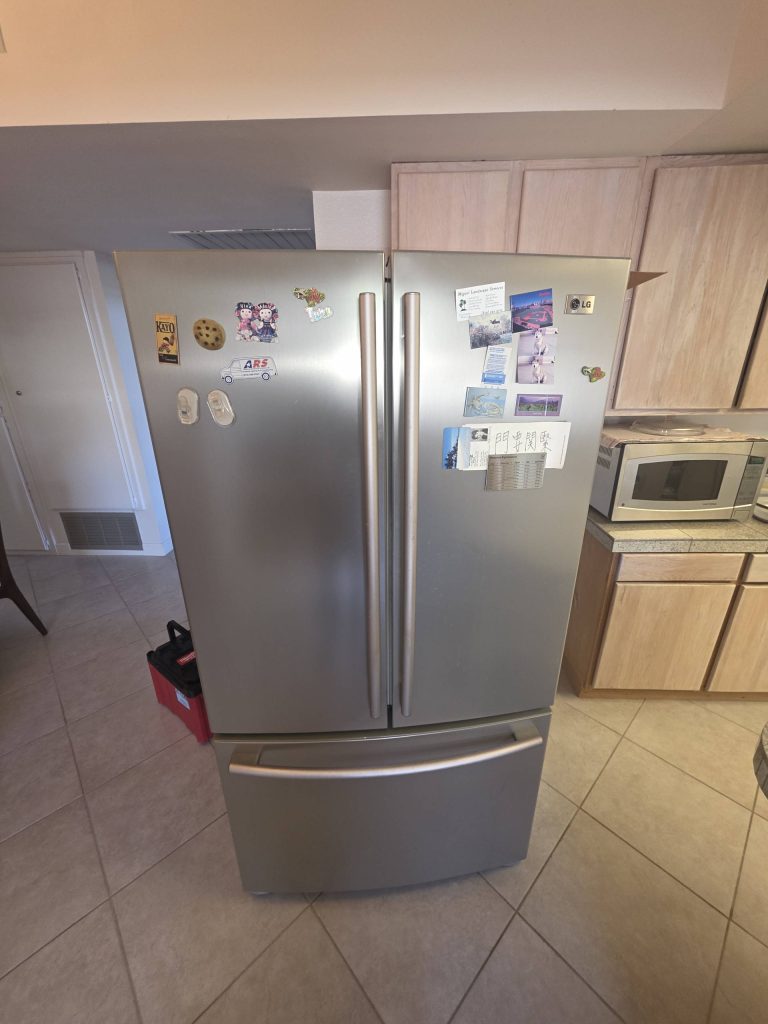
Defrost heater and related components
Most modern freezers rely on a defrost heater that activates periodically to melt thin frost layers on the evaporator coils. Meltwater then drains away through a channel.
If the heater weakens or fails completely, frost remains on the coils and gradually turns into thicker ice. This ice often spreads to the nearest cold surface, which is the back wall of the freezer compartment.
Other components can trigger the same effect:
- Defrost thermostat that does not signal the heater in time
- Temperature sensor giving incorrect readings
- Control board not initiating defrost cycles
When any of these parts fail, frost removal becomes inconsistent. The result is a repeating ice patch that grows after each cooling cycle.
Airflow restrictions inside the freezer
Air circulation is another key factor. Cold air is meant to move evenly through vents and return paths. When airflow is disrupted, moisture condenses and freezes in a single area.
Common reasons include:
- Blocked air vents caused by overloading shelves
- Frost buildup around the evaporator fan
- Fan motor slowing down or stopping intermittently
- Items placed directly against the back wall restricting circulation
When air cannot circulate freely, temperature differences appear inside the compartment. The back wall becomes the coldest point, which accelerates ice formation in that exact spot.
Door sealing and humidity entry
A worn or slightly deformed door gasket allows warm air to enter the freezer. Even small gaps introduce moisture. That moisture freezes immediately on the coldest surface, which is usually the back wall.
This type of issue often goes unnoticed because the freezer still maintains overall cold temperatures. The difference shows up in repeated frost patterns rather than total cooling failure.
How the problem develops over time
At first, the ice layer appears thin and localized. It may be removed manually without noticeable changes in performance. As the underlying cause continues, the layer becomes thicker and more persistent.
Typical progression includes:
- Faster reappearance of ice after cleaning
- Reduced usable storage space
- Slight temperature fluctuations in stored food
- Compressor running longer cycles
At later stages, airflow is significantly restricted, and cooling efficiency drops.
What can be checked before repair
Some basic checks can help narrow down the cause:
- Observe whether vents inside the freezer are blocked
- Listen for the evaporator fan operating during the cooling cycle
- Inspect the door seal for gaps or stiffness
- Check if ice builds up evenly or strictly in one area
These observations do not replace technical diagnostics but help identify whether the issue is airflow-related or part of the defrost system.
Why professional diagnosis matters
Defrost systems combine electrical and mechanical components that must operate in sequence. A faulty sensor, a weak heater, or a control board error can produce similar external signs. Without testing, replacing random parts rarely solves the issue.
Airflow problems can also be misleading. Ice on the back wall may look like a cooling failure, while the compressor itself is functioning correctly.
A structured diagnosis typically includes:
- Electrical testing of the defrost heater
- Resistance checks of sensors and thermostats
- Inspection of evaporator fan performance
- Airflow and temperature mapping inside the compartment
This approach identifies the root cause rather than the visible symptom.
Ice accumulation on the back wall of a freezer is a signal of imbalance in either defrost control or internal air circulation. Ignoring it leads to reduced efficiency, higher energy consumption, and unnecessary load on the compressor system.
If the issue repeats after manual defrosting, the underlying fault requires technical inspection and repair.
For accurate diagnostics and restoration of normal freezer operation, contact the Service Center. Early service prevents deeper damage and restores stable cooling performance.