
Kenmore Washing Machine Drum Won’t Turn — Possible Drive Belt or Motor Coupling Failure
A Kenmore washing machine that fills with water but the drum won’t turn has a mechanical or drive-system problem that should be diagnosed before the appliance is used again. The washer may appear to start normally, but if the drum remains stationary during agitation or the spin cycle, clothes will not be washed properly and water may not be removed from the load.
Two common causes are a worn or broken drive belt and a failed motor coupling. Both components transfer power from the washer motor to the drum or transmission system, so damage to either one can prevent the drum from rotating. However, other parts can produce similar symptoms, including the motor, lid switch, transmission, clutch, pulley, or electronic controls.
One of the first signs of a drive belt problem is a washer that fills and drains but does not agitate or spin. Depending on the Kenmore model, you may hear the motor running while the drum stays still. A damaged belt can become stretched, cracked, frayed, or completely broken. When this happens, the motor may continue operating without being able to transfer enough power to rotate the drum.
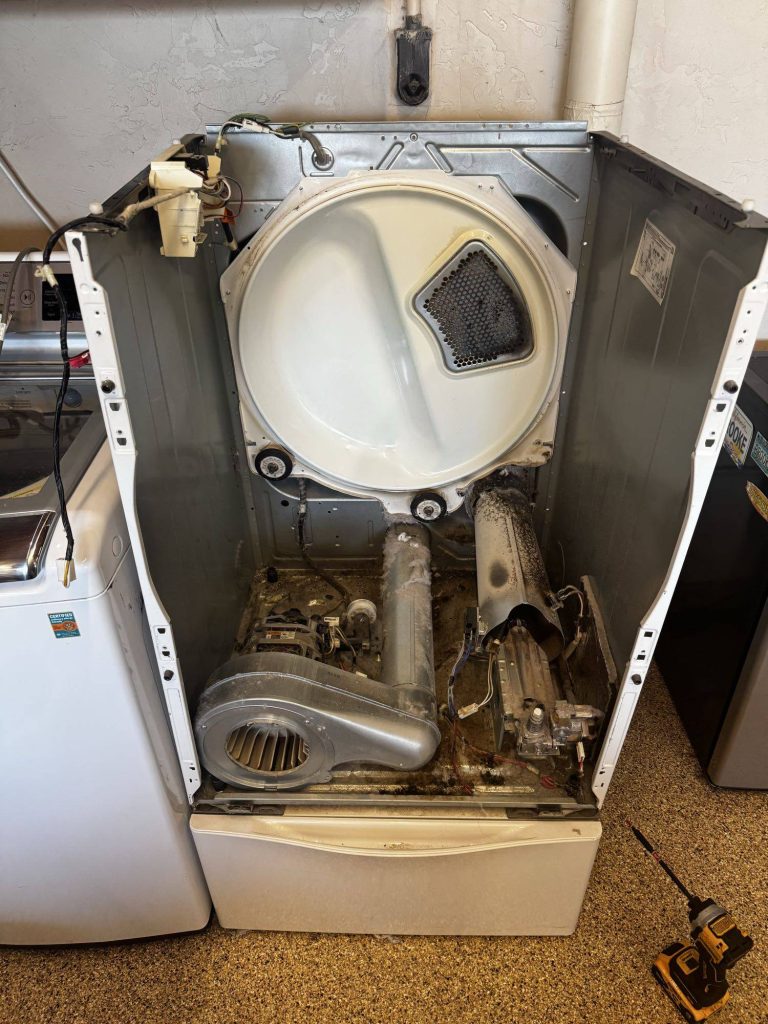
A worn belt can also produce unusual noises. You might hear squealing, slipping, or a repetitive rubbing sound during operation. If the belt has become loose, the drum may turn inconsistently or struggle to reach the proper spin speed. Continuing to operate the washer in this condition can place additional stress on other drive components.
The motor coupling is another possible source of the problem, particularly on Kenmore washers that use this type of drive system. The coupling connects the motor to the transmission and is designed to protect the motor and transmission from excessive mechanical stress. Over time, repeated loads and normal wear can cause the coupling to crack or break.
A failed motor coupling often causes a washer to fill with water and then stop when it should begin agitating. The machine may also drain normally but fail to spin. In some cases, you may hear the motor operating even though the drum does not move. Because the symptoms can resemble a belt failure, identifying the damaged component requires proper inspection.
The washer’s motor itself should also be considered. If the motor does not start, the drum will not receive the power necessary to turn. A defective motor may produce humming, clicking, or no sound at all. An appliance technician can test the motor and determine whether it is receiving the correct electrical supply and whether its internal components are functioning properly.
The clutch can cause similar spin problems. During the spin cycle, the clutch helps the basket accelerate to the required speed. If it becomes worn, the washer may agitate normally but fail to spin correctly. You may notice that the drum turns slowly, struggles to accelerate, or leaves clothes much wetter than usual.
A damaged pulley or another obstruction in the drive system can also prevent the drum from turning. If a pulley is seized or a component becomes misaligned, the motor may be forced to work harder. This can create additional noise and increase the risk of damage to other parts.
Before scheduling a repair, you can check a few basic things safely. Make sure the washer is connected to power and that the selected cycle is appropriate for the load. Avoid repeatedly restarting the machine if the drum remains stationary, especially if you hear grinding, burning, squealing, or loud mechanical noises. Disconnect the appliance from power before any physical inspection.
It is also worth checking whether the problem occurs during both agitation and spin. If the drum does not move during either function, a drive-related problem becomes more likely. If it agitates but does not spin, the clutch, lid switch, motor, transmission, or control system may need closer examination.
Opening the washer cabinet to inspect a belt, coupling, motor, or transmission can involve electrical and mechanical hazards. Some components may also require model-specific disassembly procedures. A professional diagnosis helps prevent unnecessary part replacement and identifies the actual cause of the failure.
The correct repair depends on the Kenmore model and the condition of its components. A broken belt may be relatively straightforward to replace, while a motor coupling or transmission-related failure can require more extensive work. Using the correct replacement part is important because Kenmore washers use different drive systems across models.
Ignoring a drum that will not turn can lead to additional problems. A motor that continues running against a damaged drive system may overheat, while repeated attempts to operate the washer can worsen worn mechanical components. A washer that cannot spin properly may also leave clothes saturated, increasing drying time and making normal laundry cycles ineffective.
If your Kenmore washing machine fills, drains, or powers on but the drum refuses to turn, professional troubleshooting can determine whether the issue is caused by the drive belt, motor coupling, motor, clutch, pulley, transmission, or another component.
For reliable appliance troubleshooting and repair, contact the Service Center. A qualified technician can inspect your Kenmore washer, identify the failed component, and recommend the appropriate repair. Schedule service today to restore proper drum movement and get your washing machine back to normal operation.