
Dishwasher Leaves a Gritty Film on Dishes: What’s Really Going On
A dishwasher can complete a full cycle, run quietly, and still leave plates with a rough, sandy texture. The problem usually appears gradually. At first, it’s a faint residue on glasses. Later, it becomes a consistent gritty layer across dishes, utensils, and cookware. The issue is rarely about cleaning power alone. In most cases, it signals a disruption in filtration, water circulation, or rinse performance.
Clogged or inefficient filtration system
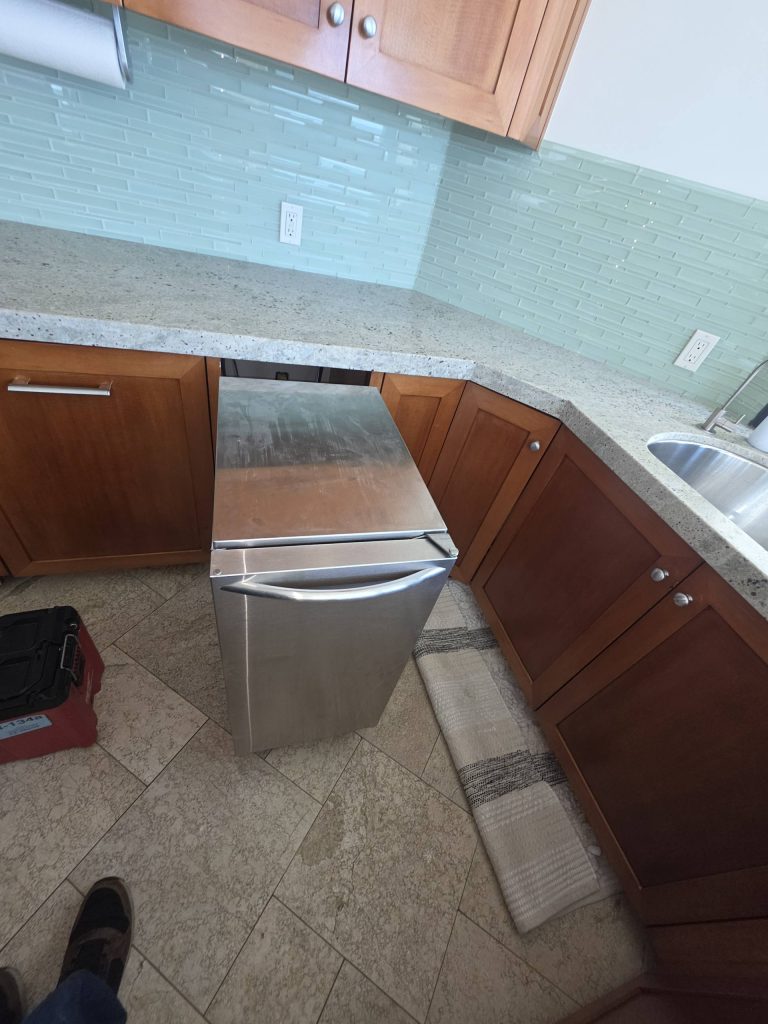
Every dishwasher relies on a filter system that traps food particles and prevents them from recirculating. When this filter becomes partially clogged, water flow weakens and debris starts moving back onto dishes instead of being removed.
A common scenario is slow buildup. Small particles pass through during several cycles and settle in the filter housing. The machine continues to run, but cleaning efficiency drops. Even if dishes look visually clean, microscopic particles remain and create that gritty texture.
Regular cleaning of the filter helps, but damage or deformation of the filter mesh reduces its effectiveness permanently.
Spray arm blockages and uneven water distribution
Spray arms are responsible for distributing water under pressure. If the small holes in the arms become blocked with mineral deposits or food residue, water no longer reaches all areas evenly.
This creates two problems at once. Some dishes are overexposed to detergent residue, while others are barely rinsed. In both cases, particles remain on surfaces and form a noticeable grit.
Another issue is imbalance in rotation. If spray arms are slightly warped or restricted, they rotate unevenly, leaving parts of the dishwasher chamber under-washed.
Water hardness and mineral buildup
Hard water is one of the most overlooked causes of gritty dishes. High mineral content leads to calcium and magnesium deposits inside the dishwasher system. These minerals do not dissolve during washing and can settle back onto dishes during the rinse phase.
Over time, internal components such as heating elements, pipes, and spray arms become coated. This reduces water pressure and changes how detergent performs. Instead of fully dissolving and rinsing away, detergent particles may cling to surfaces and combine with mineral residue.
In regions with consistently hard water, a water softening system or rinse aid becomes essential for stable results.
Detergent dosage and quality imbalance
Incorrect detergent use also plays a role. Too much detergent can leave behind residue that feels gritty after drying. Too little detergent reduces breakdown of food particles, which then circulate in the wash water.
Low-quality detergent often fails to dissolve completely, especially in shorter cycles or cooler wash programs. The result is partial residue that settles back onto dishes during drying.
Switching detergent type or adjusting dosage can sometimes resolve the issue without mechanical repairs.
Drainage and water exchange problems
A dishwasher must fully drain dirty water between stages. If the drainage system is partially blocked, dirty water may remain in the system and mix with fresh rinse cycles.
This creates a cycle of contamination where particles are never fully removed. Even a small obstruction in the drain hose or pump can affect final rinse quality.
In such cases, dishes may not appear dirty in the traditional sense, but still feel rough due to fine suspended particles that never fully exit the machine.
Internal wear and pump performance decline
As dishwashers age, circulation pumps lose efficiency. Reduced pressure means water cannot reach all surfaces with the same force. This leads to incomplete rinsing, especially in upper racks or tightly packed loads.
Worn seals and internal leaks can also redirect water flow away from spray arms, weakening the entire cleaning process. These issues are not visible from the outside but directly affect wash quality.
When the issue requires technical inspection
If cleaning the filter, checking detergent use, and running maintenance cycles do not improve results, the problem is likely mechanical. Internal blockage, pump wear, or circulation faults require diagnostic tools to identify accurately.
Continuing to use the appliance in this condition may worsen buildup inside the system and increase long-term repair costs.
Professional inspection focuses on water pressure testing, spray arm calibration, drainage flow analysis, and internal cleaning of hidden channels.
A gritty residue after a completed dishwasher cycle is a signal of disrupted water flow or incomplete filtration. The causes range from simple filter clogging to deeper mechanical issues inside the circulation system.
Identifying the exact source early prevents further wear and restores consistent cleaning performance.
For accurate diagnosis and repair, contact the Service Center. Professional servicing ensures full system cleaning, proper water distribution, and stable dishwasher operation.