
Refrigerator Freezer Works, But Fresh Food Feels Warm — What’s Really Going ON
When the freezer keeps food solid and stable, it often creates the impression that the refrigerator is functioning correctly overall. Yet the fresh food compartment may tell a different story: milk spoils faster, vegetables lose freshness within days, and drinks feel only slightly chilled. This imbalance usually points to a problem in how cold air is distributed inside the appliance rather than a complete cooling failure.
In most modern refrigerators, cooling is generated in the freezer section. Cold air is then moved into the fresh food compartment through vents and channels using an evaporator fan and a system of dampers. When any part of this airflow cycle is disrupted, the freezer can still perform normally while the refrigerator section gradually warms up.
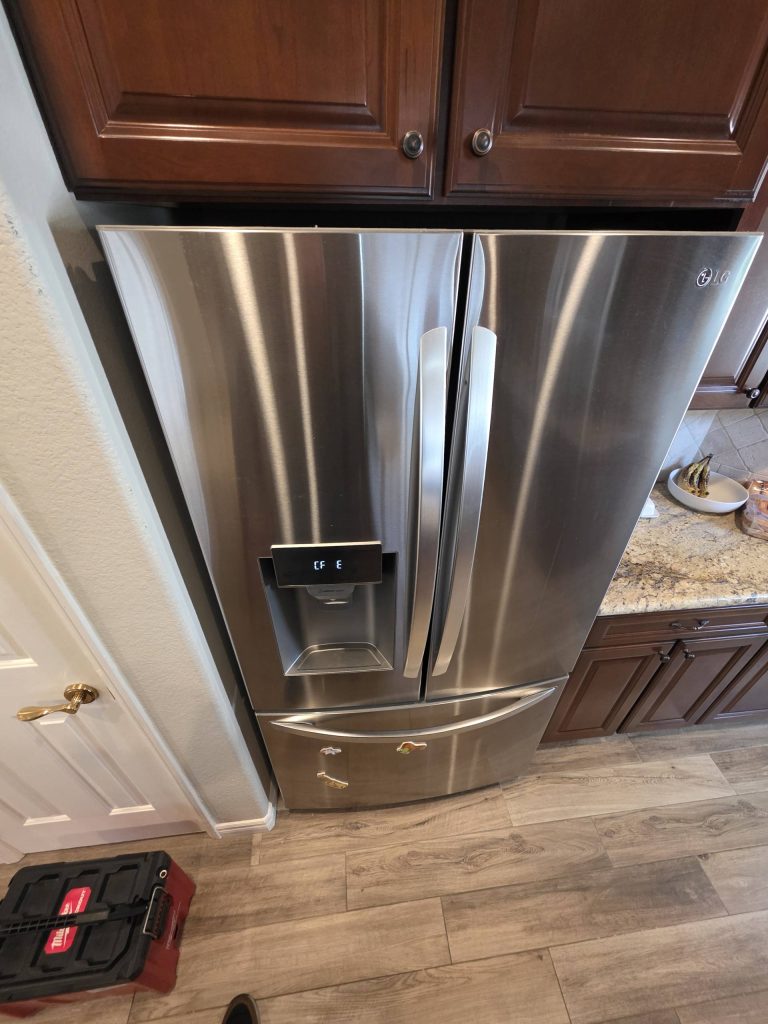
Evaporator fan malfunction
The evaporator fan is responsible for pushing cold air from the freezer into the refrigerator compartment. If this fan weakens, becomes noisy, or stops intermittently, cold air circulation drops significantly. The freezer may still maintain low temperatures because it is directly exposed to the cooling coils, but the refrigerator section receives less airflow.
Typical signs of a faulty fan include uneven cooling, a faint buzzing or clicking sound from the freezer area, or complete silence where airflow noise used to be noticeable. In some cases, ice buildup around the fan blades can also restrict movement, reducing efficiency without fully stopping the fan.
Blocked air vents and internal obstructions
Even when the fan is working properly, airflow can be restricted by physical blockages. Overloading the refrigerator with food, especially near the rear vents, can prevent cold air from circulating freely. Plastic packaging, containers placed too close to vents, or ice accumulation inside air channels can all contribute to uneven temperature distribution.
This type of issue often develops gradually. Users notice that certain shelves stay colder than others, while the upper sections begin to warm up first. Rearranging food items sometimes provides temporary relief, but the underlying airflow limitation remains.
Damper control failure
Between the freezer and refrigerator compartments, a damper regulates how much cold air enters the fresh food section. If this component becomes stuck in a partially closed position, airflow is reduced regardless of fan performance. Mechanical dampers can jam due to wear, while electronic ones may fail due to sensor or control board issues.
When the damper is not functioning correctly, temperature fluctuations become inconsistent. The freezer remains stable, but the refrigerator struggles to maintain a safe cooling range.
Frost buildup on the evaporator coil
Another common cause is excessive frost accumulation on the evaporator coils. This usually happens when the defrost system is not working properly. As frost thickens, it blocks airflow pathways and reduces the efficiency of the evaporator fan. Over time, the refrigerator compartment receives less and less cold air.
In early stages, the issue may appear as mild warming in the fresh food section. Later, it can progress to complete loss of cooling while the freezer still appears partially functional. This condition requires technical inspection, as the defrost heater, sensor, or timer may all be involved.
Air circulation imbalance and sensor errors
Modern refrigerators rely on temperature sensors placed in different zones to regulate cooling cycles. If a sensor becomes inaccurate or fails, the system may misinterpret the actual temperature in the fresh food compartment. As a result, cooling cycles become poorly timed or insufficient.
This leads to a situation where the freezer remains unaffected, but the refrigerator section does not receive enough cooling cycles to maintain proper temperature stability.
When professional diagnosis becomes necessary
While some airflow issues can be partially managed by reorganizing storage or defrosting the appliance, most underlying causes require technical inspection. Fans, dampers, sensors, and defrost systems are interconnected. A failure in one element often affects the entire cooling balance.
Ignoring early signs usually leads to worsening performance, higher energy consumption, and food spoilage. A proper diagnosis helps identify whether the issue is mechanical, electronic, or related to airflow design.
Service Center support
If the refrigerator freezer is working but the fresh food compartment remains warm, the system is no longer operating in balance. This is a clear signal that internal components need inspection and calibration.
Order a professional diagnosis and repair from the Service Center to restore stable cooling, correct airflow distribution, and prevent further system overload. Early intervention helps avoid costly component replacement and keeps the appliance operating efficiently.
Call us
(858) 402-0800